If you watered your garden this morning, you probably did it for two or three times longer than necessary. Not because you weren’t paying attention, but because the timing was likely off. Most gardeners water in the late afternoon or early evening, after work, when the day is starting to cool down and the watering can or hose feels like a satisfying end-of-day ritual. That timing is the single most common reason home gardens consume more water than they need.
The window that actually maximizes plant uptake and minimizes waste is narrow: roughly between 5 and 9 AM, depending on your latitude and season. Within that window, plants drink more efficiently, soil holds moisture longer, and the air stays cool enough that evaporation barely happens at all. Outside that window, watering becomes increasingly inefficient, sometimes shockingly so. The EPA WaterSense outdoor watering guidance puts early morning at the top of its recommended-time list for exactly these reasons.
Why dawn watering works
Three things happen at dawn that don’t happen later in the day:
- The soil is cool. Water poured onto cool soil percolates downward toward roots instead of evaporating off the surface.
- The air is still and humid. Lower wind and higher humidity mean less water lifts off leaves and soil as vapor.
- Plants are primed to drink. Stomata, the tiny pores on leaves, are open and active in the morning, drawing water through the plant efficiently. By midday they partially close to conserve moisture in heat.
The combined effect: a morning-watered garden retains 25 to 50 percent more of the applied water than the same garden watered at midday, and 10 to 20 percent more than one watered at dusk.
The midday disaster
Midday is the worst possible time to water. The soil is hot, the air is dry, the sun is direct. Water hitting hot soil evaporates within minutes. Water on leaves boils off before it can be absorbed. In hot climates, midday irrigation can lose 30 to 60 percent of the applied water to evaporation alone.
There’s also the matter of leaf scorch. Water droplets on leaves act as tiny magnifying lenses under direct sun, focusing heat onto leaf tissue and creating small burn spots. This is more cosmetic than fatal for most plants, but it adds up across a summer.
| Watering time | Evaporation loss | Plant uptake | Notes |
|---|---|---|---|
| 5 to 9 AM | 5 to 10% | Optimal | Best window |
| 9 AM to noon | 15 to 25% | Good | Acceptable on cool days |
| Noon to 4 PM | 30 to 60% | Reduced | Avoid if possible |
| 4 to 7 PM | 10 to 20% | Good | Increases disease risk |
| After dusk | 2 to 5% | Suboptimal | Wet leaves overnight equal fungal disease |
The evening problem
Evening watering is the natural-feeling alternative to dawn watering, and it’s the one most home gardeners default to. The water evaporates less, and the timing is convenient, but it introduces a new problem. Leaves and stems that stay wet overnight create ideal conditions for fungal diseases. Powdery mildew, leaf spot, blight, and rust all flourish in damp foliage that doesn’t dry until morning.
If you can only water in the evening, do two things to mitigate:
- Water the soil directly, not the leaves. Drip irrigation, soaker hoses, or a hose nozzle aimed at the base of the plant.
- Water earlier in the evening, ideally before 7 PM, so leaves have a chance to dry before nightfall.
How much to actually apply
Most established garden beds need about one inch of water per week, including rainfall. That sounds like a small amount, but it works out to roughly 0.6 gallons per square foot per week. For a 100-square-foot bed, that’s 60 gallons.
The key is that this should be delivered in one or two deep waterings, not seven shallow ones. Deep, infrequent watering encourages roots to grow downward in search of moisture, which makes plants drought-resilient. Frequent shallow watering keeps roots near the surface, where they dry out faster and become dependent on more frequent watering: a vicious cycle.
One deep dawn watering per week, in most climates, beats five quick evening sprinkles in both plant health and water savings.
Tools that help
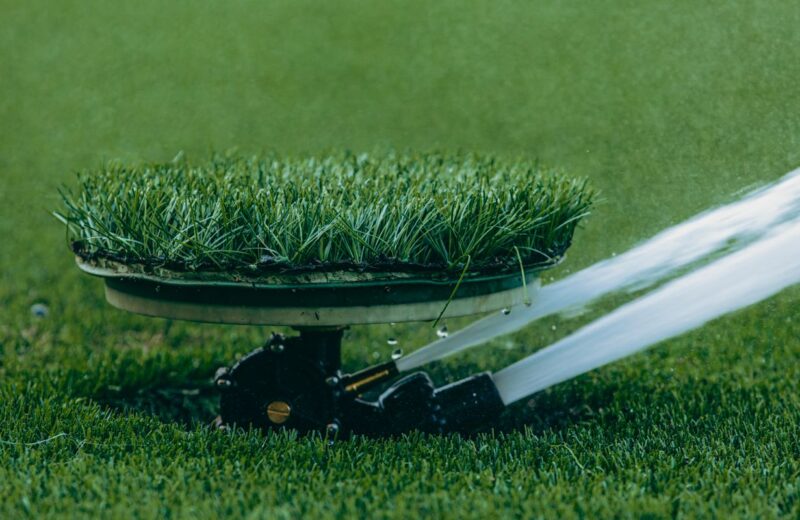
If you can’t physically be in the garden at 6 AM, the work-around is automation. Even the simplest battery-operated hose timer, $25 at any garden center, can be set to run a drip line or sprinkler for 30 minutes starting at 6:30 AM. Smart controllers ($60 to $200) integrate with weather forecasts and skip watering on rainy days automatically. WaterSense-labeled controllers are independently certified for irrigation efficiency; see the EPA WaterSense product database to compare models before you buy.
For homes with multiple zones (vegetable garden, flower beds, lawn), a basic four-zone smart controller pays back its cost in saved water within a single growing season for most households.
The exceptions
A few situations warrant breaking the dawn-watering rule:
- New transplants. Freshly planted seedlings benefit from immediate watering regardless of time. Their root systems are too shallow to retrieve deep moisture.
- Containers. Pots dry out faster than ground beds. In hot weather, container plants may need watering twice a day, and a brief evening top-up is fine.
- Emergency rehydration. A plant visibly wilting at midday from heat stress can be watered immediately to prevent damage. Efficiency takes a backseat to plant survival.
The summer-long savings
For a typical home garden in a hot summer climate, switching from afternoon watering to dawn watering saves about 1,000 to 2,500 gallons across a growing season. That’s a meaningful reduction in the outdoor water budget without any change to garden size or plant variety. The plants themselves usually do better, not worse. They get deeper roots, more even moisture, and fewer disease problems.
The shift takes about a week to settle into. Most people who try it stay with it permanently. The garden looks better. The bill looks better. And the only thing that changed was the hour on the clock when the hose came out.
Rebates for smart irrigation timers and lawn conversion
Many U.S. water utilities offer rebates that reduce the cost of outdoor water upgrades. Rebate offerings for garden and lawn work vary sharply by region: California, Arizona, Nevada, and parts of Colorado run the most aggressive programs, while wetter states often have very little on offer. It’s worth a quick check before you buy anything for the yard.
Common outdoor rebate categories include:
- WaterSense-labeled smart irrigation controllers ($50 to $200)
- Drip and micro-irrigation retrofits (variable, often 50 percent of parts cost)
- Lawn replacement with drought-tolerant landscape ($1 to $3 per square foot)
- Rain barrels and cisterns ($25 to $200)
- Soil moisture sensors and rain shut-off devices (small flat rebates)
These rebates often exceed the price premium over standard equipment, so a smart controller ends up cheaper than a plain timer once the paperwork clears. Check with your local water utility or visit their conservation page to see what’s currently available. Programs change frequently, so what wasn’t offered last year may be there now.