Most of us learned to clean by watching adults clean. Mopping involved buckets of water. Wiping down counters involved a wet rag. Sweeping involved a broom and a damp follow-up. Washing windows meant streaks of soapy water and a frantic chase to wipe them off before they dried.
The cumulative water use of these wet-by-default cleaning methods is significant, typically 30 to 80 gallons a week in an actively cleaned home. What’s often overlooked is that for many of these routines, dry methods clean as well or better, faster, and with no water at all. Given that indoor water use averages around 82 gallons per person per day in the US, trimming a chore that pulls another 5 to 10 gallons daily is a real dent, not a rounding error.
Dust mopping versus wet mopping
A dry microfiber dust mop, run across hard floors before any wet mopping happens, picks up 90+ percent of loose dust, hair, and debris. The follow-up wet mop, if needed at all, can be done with a fraction of the water because most of the surface debris is already gone.
Many households can skip wet mopping entirely on between-cleaning days. A daily dust mop pass keeps floors visually clean for weeks of normal living, with deeper wet mopping reserved for once or twice a month.
Time savings: about half the time of traditional mopping. Water savings: 80 to 150 gallons per month.
The dry sweep before everything
The general principle: dry methods first, wet methods only where dry won’t do.
- Sweep before mopping (always)
- Dust before wet wiping
- Vacuum before steam cleaning
- Brush before rinsing
The amount of surface dirt removed by dry methods is far greater than most homeowners assume. Wet cleaning then handles only what dry methods can’t reach, usually the genuinely stuck-on stains and residues.
Window cleaning without buckets
Traditional window cleaning involved buckets of soapy water, multiple cloths, and a final newspaper-buff. Modern microfiber technology has made this almost obsolete.
The modern approach:
- Spray a small amount of glass cleaner directly on the window (or a damp microfiber cloth).
- Wipe with a clean microfiber cloth.
- Buff with a dry microfiber cloth.
Total water use per window: a few ounces. No bucket. No streaks. Cleaner result than the bucket-and-newspaper method.
Dust removal without dusting spray
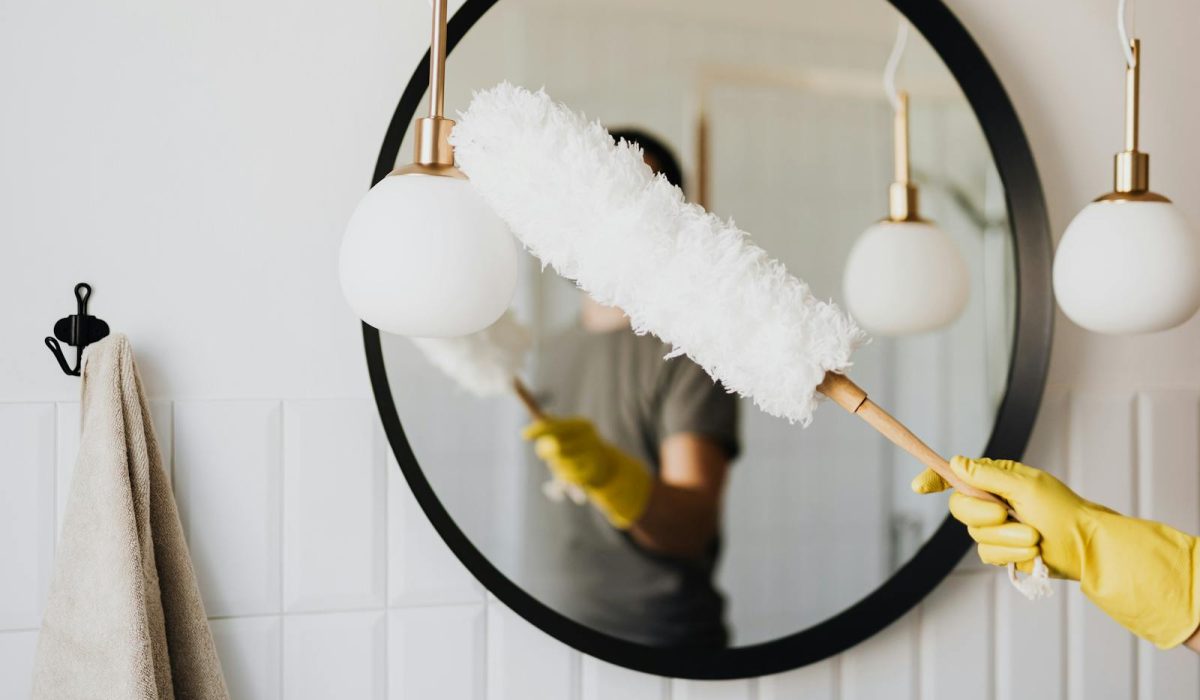
Feather dusters and dry microfiber dusters trap dust through static charge rather than adhesion. They work on furniture, blinds, fan blades, electronics, and most surfaces where dust accumulates.
Traditional dusting often involves a damp cloth or spray dusting product. These work, but they’re not necessary for the routine dust accumulation between deep cleanings. A dry dusting tool covers 95 percent of what dusting actually needs to do.
Carpet cleaning between deep cleans
The space between professional carpet cleanings can be maintained with dry methods:
- Frequent vacuuming. Twice-weekly removes the dust and debris that becomes embedded between cleanings.
- Baking soda treatment. Sprinkle baking soda on carpet, wait 15 minutes, vacuum. Removes odors and refreshes carpet fibers.
- Spot cleaning only as needed. Address specific stains immediately; don’t wet-clean entire carpets routinely.
This approach delays the need for professional deep cleaning by 6 to 12 months and uses essentially no water.
Upholstery
| Cleaning need | Wet method | Dry alternative |
|---|---|---|
| Routine refresh | Steam clean | Vacuum + baking soda |
| Pet hair | Lint roller in damp soap | Rubber glove rubbed across surface |
| Light stains | Wet cleaning | Dry cleaning powder |
| Deep stains | Professional clean | Same, since water can’t always be avoided |
Routine furniture care is overwhelmingly dry-method territory. Wet cleaning is appropriate for specific stains, not as a baseline.
Hardwood floor care
Hardwood is particularly susceptible to water damage from over-cleaning. A spray-and-microfiber routine uses 90 percent less water than traditional mopping and produces a cleaner result without the moisture damage that wood floors slowly accumulate.
For deep cleaning, a periodic damp mop is fine. Day-to-day maintenance, though, should be dry. Most hardwood floor manufacturers explicitly recommend against wet mopping as a routine practice.
Bathroom counters and surfaces
The wet rag approach to bathroom counters wastes water through repeated rinsing. The alternative:
- Spray surface with diluted cleaner.
- Wipe with dry microfiber cloth.
- Final buff with second dry cloth if needed.
The cloths get washed periodically rather than rinsed during each cleaning. Total water use: zero during the cleaning, plus the laundry load (which would happen anyway).
The dishwasher principle, applied broadly
The same principle that makes modern dishwashers more efficient than hand washing applies to other cleaning tasks: concentrated work in a controlled environment is more efficient than the spread-out, water-heavy approach.
For example:
- Cleaning the microwave: heat a small bowl of water with lemon inside for 3 minutes, then wipe (uses about 1 cup of water versus several quarts of rinsing)
- Cleaning the oven: chemistry-based oven cleaner sits overnight, then wipes off (uses essentially no water)
- Cleaning showers: a daily spray after use (one small spray bottle versus weekly heavy scrubbing)
What doesn’t work dry
Some cleaning genuinely requires water:
- Cleaning grease from kitchen counters (a wet rag is faster than dry methods)
- Removing dried food residue
- Cleaning vomit or biological spills
- Heavy stains on grout or tile
- Deep carpet cleaning when actually needed
The point isn’t to eliminate water from cleaning. It’s to stop using water as the default. Wet cleaning is for things dry methods can’t address; everything else should be dry-method first.
The aggregate impact
A household that systematically switches to dry-first cleaning routines typically saves 80 to 200 gallons of water per week. Across a year, that’s 4,000 to 10,000 gallons.
The cleaning itself isn’t worse. In many cases it’s noticeably better: surfaces dry faster, no streaks from imperfect drying, less wear on materials that don’t tolerate moisture well. The water savings are mostly a side effect of a cleaning approach that was already more efficient on its own merits.
Cleaning routines are inherited from previous generations who often had different water concerns. Updating those routines to match modern materials and modern understanding doesn’t sacrifice cleanliness. It just removes the unnecessary water from a chore that doesn’t need it.
What a decade of dry-first cleaning saves
Individual conservation actions look small in isolation. A 30 percent reduction in shower water. A new faucet aerator. A more efficient toilet. None of these individually transforms a household’s water bill. The cumulative effect across years, though, is substantial: both in resources saved and in how the household relates to water generally.
A household that completes a basic set of conservation upgrades and habits typically uses 40 to 60 percent less water within a few years than it did before starting. Across a decade, the cumulative water savings reach hundreds of thousands of gallons. The cumulative dollar savings reach thousands of dollars. The cumulative carbon savings (from reduced hot-water heating) add another meaningful dimension.
None of this requires heroic effort in any single moment. It requires consistent attention over time: the willingness to keep making small improvements when they present themselves, the discipline to maintain what’s been installed, the patience to let the savings compound. The household at year ten doesn’t look dramatically different from the household at year one, except that it’s quietly running on roughly half the water. That’s the slow win that conservation practice delivers when it’s taken seriously over time.