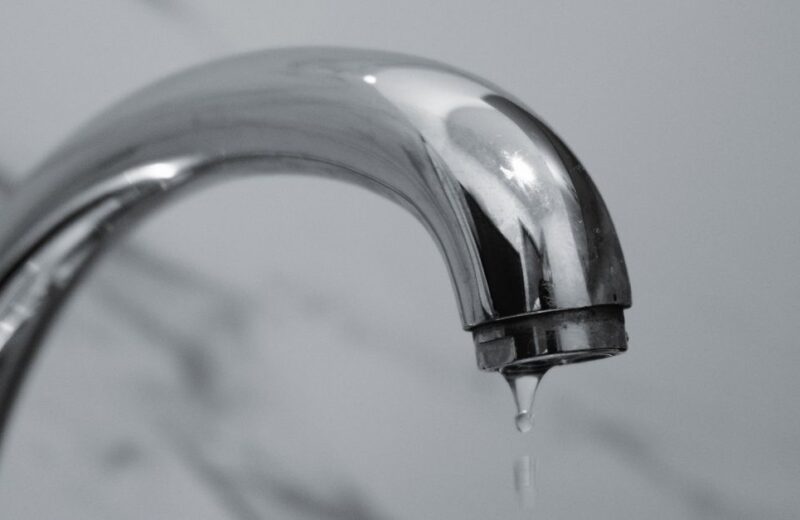
The leaky faucet that goes “drip… drip… drip…” in the background of countless American kitchens and bathrooms doesn’t feel like an emergency. It’s just a drip. You’ve been meaning to fix it. It’s on the list. Maybe this weekend. Or next.
What that drip is actually doing, while you’re not getting around to it, is a quietly serious thing. A typical slow drip releases water at about 60 drops per minute. Each drop is roughly 0.25 milliliters. That works out to 15 milliliters per minute, or about 5.4 liters per day. Translated to American units, that’s around 1.4 gallons daily.
A faster drip, say a drop every second, works out to 8.6 gallons per day, or 3,140 gallons per year. The EPA’s Fix a Leak Week program estimates household leaks waste nearly 1 trillion gallons of water nationwide each year, most of it from exactly this kind of small, ignored drip.
None of these numbers feels intuitive when you’re looking at the actual drip. A single drop of water is too small to imagine accumulating into thousands of gallons. But the math is the math.
The real-world numbers
| Drip rate | Daily loss | Annual loss |
|---|---|---|
| 1 drop / 5 sec (very slow) | 0.5 gal | 180 gal |
| 1 drop / 2 sec (slow) | 1.4 gal | 510 gal |
| 1 drop / sec (steady) | 2.8 gal | 1,020 gal |
| 2 drops / sec (fast) | 5.6 gal | 2,040 gal |
| Tiny continuous stream | 10 to 20 gal | 3,650 to 7,300 gal |
The “tiny continuous stream” category is what happens when a drip becomes so frequent that drops merge into a thin trickle. At that point you’re losing the equivalent of an entire bathtub each week from a fixture you barely notice.
Where drips usually come from
The most common slow drips:
- Faucet spouts. Worn washer or cartridge inside the faucet handle.
- Showerheads. Mineral buildup or worn washer at the connection.
- Outdoor spigots. Damaged washer or split valve seat.
- Toilet flappers. Slow leak from tank to bowl.
- Hose connections. Cracked rubber washer in the coupling.
- Water heater pressure relief valve. Failing valve or excessive pressure.
- Refrigerator water dispenser. Failing seal in the dispenser line.
- Washing machine hoses. Cracks or loose connections.
Each one is independently a small thing. Cumulatively, a home with three or four small drips can be losing 20 to 50 gallons a day without anyone noticing the bill creep.
The cost of procrastination
A faucet drip you’ve been meaning to fix for six months has wasted somewhere between 80 and 1,000 gallons during that time, depending on rate. The repair takes 10 to 30 minutes and costs $1 to $15 in parts. The math of waiting is decidedly poor.
This is the same pattern across every household drip: cheap to fix, slow to escalate, fast to add up.
Fixing the most common drips
Compression faucet (two-handle, hot/cold separate)
- Turn off the water under the sink.
- Remove the handle (decorative cap, then screw).
- Unscrew the packing nut beneath the handle.
- Pull out the stem.
- Replace the rubber washer at the base of the stem.
- Reassemble and turn the water back on.
Time: 15 minutes. Cost: under $2.
Cartridge faucet (single-handle)
- Turn off the water under the sink.
- Remove the handle.
- Pull out the cartridge (some require a special tool, usually included with the new cartridge).
- Install the new cartridge.
- Reassemble.
Time: 20 to 30 minutes. Cost: $15 to $40 for the cartridge.
Showerhead drip
- Unscrew the showerhead.
- Soak in white vinegar for 30 minutes to remove mineral buildup.
- Wrap the threads in fresh plumber’s tape.
- Reinstall.
If the drip persists, the internal washer needs replacement, usually a $2 to $5 part and 10 minutes of work.
Outdoor spigot drip
Similar to a compression faucet repair. Turn off the indoor shutoff (if available), remove the handle and stem, replace the washer at the bottom of the stem. About 10 minutes.
The water heater relief valve
If your water heater’s pressure relief valve is dripping, the cause is usually one of two things:
- Excessive household water pressure. The valve is doing its job, releasing water when pressure exceeds the safety threshold. The fix is a pressure-reducing valve at the main supply.
- Failing valve. The relief valve itself is worn and dripping under normal pressure. Replace the valve.
This drip can be substantial, 5 to 15 gallons per day or more. Worth diagnosing promptly.
The hidden drip you can’t see
Sometimes the drip is inside a wall or under flooring, slow enough to evaporate before it forms visible damage. The signs:
- Higher water bill without obvious explanation.
- Faint musty smell in a specific area.
- Subtle warping in flooring or paint.
- Discoloration on ceilings or walls.
For suspected hidden drips, the meter test is the diagnostic tool. Turn off all water in the house, read the meter, wait two hours without water use, read again. Any movement indicates a leak somewhere in the system. The USGS water-use guide is useful for gut-checking whether the meter reading you’re seeing is normal for your household size.
The compounding cost
A household with three or four “I’ll get to it eventually” drips can easily waste 5,000 to 12,000 gallons per year. That’s equivalent to about a month’s worth of indoor water use for a typical family, silently disappearing into drains and walls because nobody felt the drips were urgent.
The fix isn’t dramatic. Set aside a Saturday morning. Walk through the house and check every fixture. Tighten what’s loose, replace what’s worn, run the meter test to verify. The whole project usually takes under 4 hours including hardware store runs. The savings, recurring annually, run hundreds of dollars on water and energy bills alone.
Drips aren’t dramatic. They are not, however, harmless. The casual “just a drip” framing is wildly out of proportion with what’s actually happening. A drip is a small leak. A small leak left unfixed becomes a substantial waste over time. The math doesn’t care how slow the dripping looks.
Making the leak walk a real habit
The reason drips linger is not laziness. It’s that no one in the house is officially responsible for them, and they never become urgent enough to jump the queue past louder problems. The fix is to give the leak walk a home on the calendar. Once a quarter, at the change of season, do the meter test and check every fixture in the house. Twenty minutes with a flashlight will find almost everything.
If your household is more comfortable with paper than plumbing, keep a small clipboard under the kitchen sink with a list of every faucet, toilet, hose bib, and appliance connection. Tick each one off during the quarterly walk. Note the date and any repair. Over a year, the clipboard becomes a small maintenance log that also tells you which fixtures are approaching end of life.
The households that never lose gallons to slow drips aren’t the ones with perfect plumbing. They’re the ones that check regularly and fix small things while they’re still small. That habit alone, more than any single upgrade, is what keeps a water bill flat year after year.