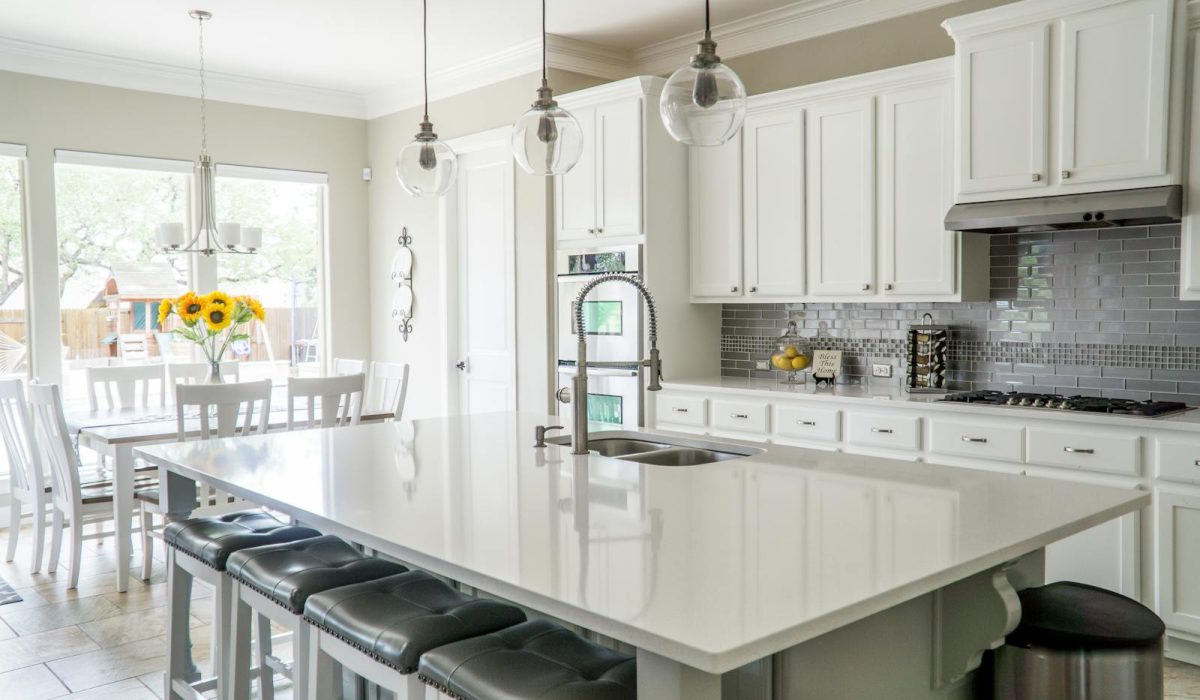
The kitchen sink is one of those fixtures we stop seeing after a while. It is there for cooking, rinsing, prepping, washing, refilling, and the dozens of small moments in a day that involve grabbing something and giving it a quick splash. None of those moments feel significant. Strung together across a week, they add up to a surprising amount of clean drinking water sliding down the drain for no reason in particular.
Our family did not realize how much water we were losing at the kitchen sink until we tried something simple for a week. We put a metered jug under the faucet and emptied it into a bucket each time we ran water for what felt like a small task. By Friday, the bucket had filled and overflowed more than thirty gallons. Not for cooking. Not for dishes. Just for the in-between moments.
The pre-rinse that does not actually need to happen
Modern dishwashers do not need pre-rinsed plates. They are designed to handle scraped-but-not-rinsed dishes, and the enzymes in modern detergent actually work better when there is something for them to grip onto. The pre-rinse habit is a holdover from older machines that needed clean plates to start with. The EPA lists routine kitchen habits like this among the biggest hidden sources of household waste.
Rinsing each plate before loading takes about ten to fifteen seconds under a running faucet, which equals roughly a third of a gallon per plate. A family of four, two meals a day, can easily push six gallons a day through this single habit. Scrape into the compost or trash, load the plate, walk away.
The “while I wait” tap
Watch yourself the next time you are waiting for water to boil. Most of us reach for the faucet to rinse a knife, splash a bowl, fill the kettle one more time, or wash off the cutting board. None of these moments feel like waste because they are each only a few seconds. But running water at full pressure for fifteen seconds delivers nearly half a gallon, and the kitchen often sees dozens of these micro-uses per meal.
The fix is not to stop rinsing things. It is to batch them. Pile small items in the sink while you cook, then rinse them together with one short burst of water rather than one short burst per item.
Filling pots from the tap when a kettle would do
Letting the cold tap run until the water turns warm, for pasta water, blanching vegetables, or filling the kettle, feels harmless. In reality, it can take fifteen to thirty seconds of running water before the temperature shifts noticeably, depending on where the kitchen sits in the house. That is another half gallon to a full gallon down the drain before the pot ever fills.
| Habit | Water lost per use | Daily impact (typical family) |
|---|---|---|
| Pre-rinsing dishes | 0.3 gal each | 6 to 10 gallons |
| Running water during prep | 0.4 gal per burst | 4 to 8 gallons |
| Waiting for cold to turn warm | 0.5 to 1 gal each | 3 to 6 gallons |
| Defrosting under running water | 5 to 8 gallons | 0 to 8 gallons |
| Continuous hand-washing vs. fill-and-soak | 1.5+ gal extra | 5 to 10 gallons |
Defrosting things under running water
Of all the kitchen habits we changed, the one that surprised me most was the cost of defrosting meat under a steady stream of cold water. A package of chicken can sit in the sink for twenty minutes that way, with the tap running gently the whole time. That is six to eight gallons gone, and the meat could just as easily have thawed in a bowl of standing water with a single refill, or better still, in the fridge overnight. USDA food-safety guidance on safe defrosting methods makes it clear that a covered bowl and cold-water changes every thirty minutes are perfectly safe, so the running tap is not required.
The “fill the basin” approach for hand washing
When you hand-wash a few dishes, the most efficient method is to plug the sink (or use a wash basin), fill it partway with warm soapy water, and dunk-rinse rather than rinse each item under a running tap. Done well, this takes about two gallons total for a small load. Done casually with the tap running between every plate, the same load can use eight to ten gallons.
- Fill once, wash everything in the warm soapy water
- Stack items as you go
- Rinse in batches: three or four items at once under a brief stream
- For sticky pans, soak first. Do not try to scrub them clean under continuous water.
Garbage disposal habits that double as water habits
Garbage disposals do not need a running deluge to function. They need enough water to flush solids through. The typical recommendation is a steady cold stream, which most of us interpret as “full open.” A medium flow does the same job and uses about a third less water for a typical thirty-second run.
The bigger fix here is what goes into the disposal in the first place. Fibrous vegetable scraps, coffee grounds, and starchy peels are better composted than ground up, both because the disposal struggles with them and because they need more flushing water to clear the pipes.
The thirty-gallon turnaround
Adjusting these habits does not take willpower. It takes a brief week of noticing. Most families we have talked to settle into the changes within ten days. The new defaults become invisible the same way the old ones did. The water bill catches up shortly after, and a typical household drops between twenty and forty gallons a day at the kitchen sink without anyone feeling like they are rationing anything.
If you live alone, the numbers scale down but the percentage savings is similar. Either way, the kitchen is where water habits hide in plain sight, and where small adjustments quietly reshape what your home consumes.
Making the new kitchen defaults last past week two
One pattern that comes up across nearly every conservation conversation we have with readers: the practices that stick are the ones that match how the household already lives. Trying to force a fundamentally different kitchen routine, like scraping every plate perfectly during a rushed weeknight dinner, or timing every faucet burst, usually fails within a few months.
The better path is finding the version of kitchen conservation that fits your specific life. For households that cook heavily on weekends, batch prep and one big dish session is the natural place to change habits. For households that mostly reheat, the disposal and pre-rinse changes matter more than technique at the basin. Pick the two or three habits from the table above that match your own cooking pattern, and let the rest evolve later. Long-term consistency on a small number of changes beats short-term intensity on all of them.