A 32-ounce spray bottle of all-purpose cleaner is roughly 95 percent water. When you pay $4.99 for it at the grocery store, most of what shipped from the factory to the shelf was tap water in a plastic jug moving across highways. That is the argument for refillable cleaning products in one sentence, and it is genuinely true. But the water math behind refillables is stranger than the marketing suggests, and a few popular formats save less water than a plain municipal supply and a pinch of baking soda.
What refillable means in cleaning aisles right now
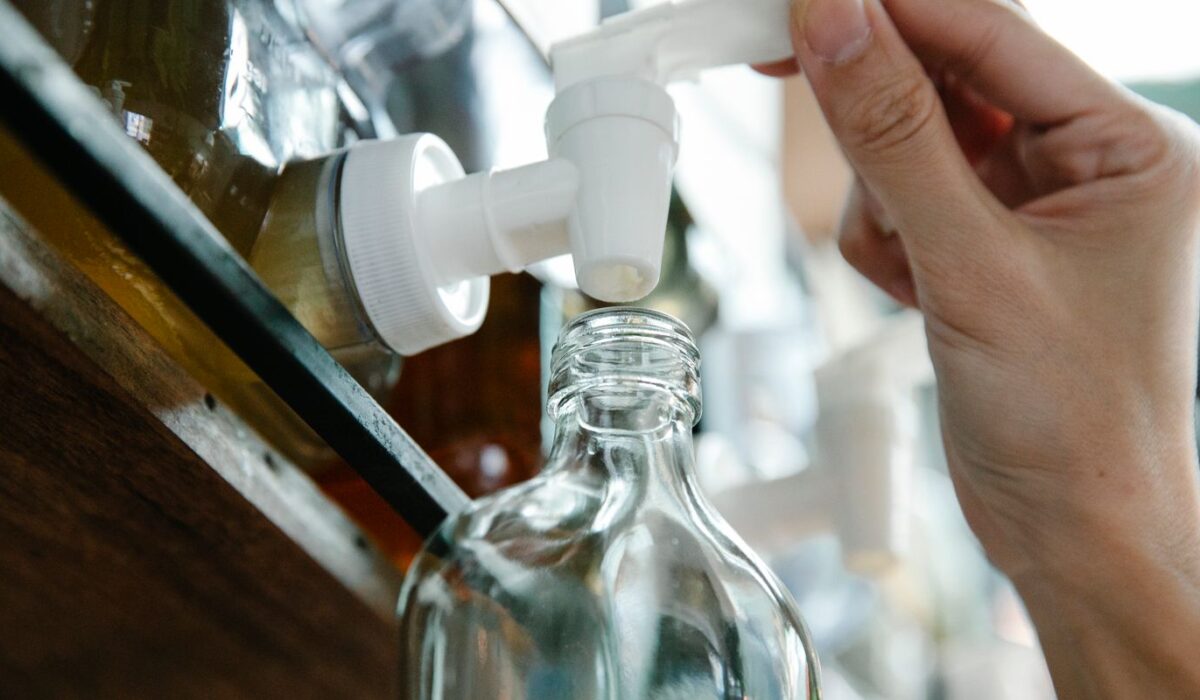
Three formats dominate the category. The tablet or capsule model (Blueland, Grove Co. Concentrates, Cleancult, Ecover) ships a pea-sized dose that dissolves in tap water inside your reused spray bottle. The concentrate pouch model (Method Refills, Mrs. Meyer’s refills) ships a smaller plastic pouch with a diluted liquid that still contains 60 to 80 percent water. The store dispenser model, growing in co-ops and zero-waste shops, pumps ready-to-use cleaner from a large jug into your reusable container.
Each of these makes a different water claim. Only one changes your water use at home in any measurable way, and it is not the one you probably picked. Understanding which is which matters because the wrong choice pays for the same convenience the ready-to-use bottle already offered.
The water you never see behind the label
The invisible water in a cleaning product is called embedded or virtual water, and it includes the tap water in the formula plus the process water used to make the container, print the label, and cool the machines on the production line. A rigid HDPE spray bottle takes roughly 6 to 8 gallons of water to manufacture, according to industry life-cycle analyses summarized by the US Environmental Protection Agency. A thin plastic refill pouch typically takes closer to 1 gallon.
Now stack the shipping. A gallon of water weighs 8.34 pounds. A pallet of ready-to-use 32-ounce spray bottles ships almost 40 gallons of water disguised as cleaner. A pallet of tablets weighing 12 grams each ships almost none. When you buy tablets and use your tap to reconstitute the formula, you are shifting the water source from an Ohio factory to your own faucet, which is a real reduction in trucking, warehouse cooling, and plastic manufacturing. The finished cleaner in your hand contains the same 946 mL of water either way. The difference is where that water started.
A worked example on your kitchen counter
Say you use one 32-ounce spray bottle of glass cleaner per month for a year. That is 12 bottles totaling 384 fluid ounces, roughly 3 gallons of cleaner, plus 12 rigid bottles.
Path A, ready-to-use: 12 bottles shipped. Manufacturing water for the bottles alone is about 84 gallons (12 multiplied by 7). Add the 3 gallons of formulation water that traveled inside those bottles. Total embedded and formulation water: 87 gallons for the year, plus the diesel and warehouse footprint of moving 12 rigid containers across two or three logistics legs.
Path B, tablet refill in one reused bottle: 1 rigid bottle you already own, and 12 tablets shipped in a cardboard sleeve. Manufacturing water for the tablets and their paper packaging is roughly 4 gallons for the year. The 3 gallons of formulation water now comes out of your tap. Because your tap water was already flowing through your municipal system, its incremental impact is essentially the treatment and distribution cost, which the American Water Works Association estimates at less than 3 gallons of process water per 100 gallons delivered. Total for the year: about 7 gallons for tablets and packaging, plus the 3 gallons of tap water you were already paying for.
That is a real 80-plus percent reduction in embedded water for one product category over one year, assuming you actually reuse the same rigid bottle.
Where the story quietly falls apart
The math above depends on three things that break more often than you would think.
First, the rinsing habit. Many refillable-bottle users empty the last inch of old cleaner and rinse the bottle before dissolving a new tablet. If you rinse a 32-ounce bottle at a full-open kitchen tap for 20 seconds, you have just used 0.7 gallons of drinking water. Do that monthly across four cleaning products and you have added 33 gallons per year to the ledger, which erases almost half the savings on that bottle. A short shake with a 3-ounce splash of water works fine for most formulas.
Second, the bottle replacement rate. Rigid HDPE spray bottles crack, get lost, or grow biofilm in the trigger assembly. If you replace the bottle every year anyway, your embedded-water number moves back toward the ready-to-use scenario. Bottles that last 3 to 5 years pay off the manufacturing water many times over.
Third, the return-shipping loop. A few refill companies offer mail-back for empty pouches. That sounds virtuous, but a USPS truck making a residential detour for a 40-gram pouch has a real carbon and water cost. Local drop-off bins or in-store refill stations avoid that leg entirely.
Where refillables plainly beat the alternative
Concentrated liquids and tablets consistently reduce the water you buy at retail, and they always reduce plastic per ounce of usable cleaner. Even a cautious accounting drawing on the EPA WaterSense program’s supply chain guidance shows a 40 to 70 percent reduction in embedded manufacturing water when a household switches to tablets or concentrated refills and keeps rigid bottles in use for at least two years.
If you already track your utility footprint and are curious how cleaning fits into the bigger picture, our piece on eco-friendly cleaning routines that use half the water covers the wiping, mopping, and dish-rinsing habits that dwarf what any spray bottle contains.
A short checklist before you switch
Buy tablets or capsules over pouches when both are available, because the pouch is still shipping water. Keep your existing rigid spray bottles until they physically fail, and label them by product to prevent chemistry mixing (glass cleaner in a bottle that once held bathroom disinfectant can streak badly). Skip the water-heavy rinse between refills; a shake with a splash is enough.
Choose a brand with local retail pickup or store refill stations over one that mails you monthly boxes. If your municipal supply is hard water above 180 ppm, run one test bottle first, because some tablet formulas leave a film in hard water and quietly encourage extra rinsing that undoes the savings. Small habit changes on top of a good format pick are where the numbers actually land.
Frequently asked questions
Does using tap water to reconstitute cleaner strain my local water supply?
For a typical household using 4 to 6 spray bottles of cleaning solution per month, the added tap-water demand is roughly 1 to 2 gallons per month, or about 0.02 percent of the average US household’s 300 gallons per day as reported by the USGS. Municipal systems are engineered around toilets, showers, and irrigation, so a few extra ounces per week is nowhere near the threshold that stresses a treatment plant or a well.
Are refill pouches recyclable?
Most refill pouches use multi-layer plastic film that curbside programs will not accept. A handful of brands run mail-back programs, and TerraCycle handles some through paid boxes. If recyclability is a priority, tablets in a paper or cardboard sleeve are cleaner than any pouch. Check your local materials recovery facility’s accepted-plastics list before buying, because acceptance varies widely from one county to the next.
Do refillable cleaners work as well as store-bought spray bottles?
For everyday surfaces, glass, and floors, well-formulated tablet cleaners perform comparably to name-brand ready-to-use products in independent testing by consumer groups. For heavy grease, mildew, or industrial soils, the concentrated formats sometimes come up short because they are optimized for general-purpose dilution. Keep one specialist product for tough jobs, and let the refills carry the everyday load where they perform best.
Should I switch every cleaner at once?
No, and trying to swap all of them in a weekend is usually how people abandon the system by month three. Start with your highest-volume product, typically all-purpose or glass cleaner, and see how the reused bottle holds up over three months. If the trigger sprayer still works and the plastic has not clouded, roll out tablets to the next category. Most households find that two rigid bottles cover 80 percent of their cleaning use.
What about dishwasher and laundry pods that came before this trend?
Laundry sheets and dishwasher pods use the same shipping-less-water logic and have been on shelves since the mid-2000s. They tend to save more water in aggregate because laundry and dish products move in larger volumes per household. If you want the biggest embedded-water win from a single switch, replace liquid detergent with sheets before you touch your surface cleaners; the per-load savings are simply larger.