Trying to teach kids about water conservation through rules and lectures rarely works. Children tune out quickly when adults shift into instruction mode about resources or sustainability. The more conservation gets framed as “what you should do,” the less interested kids become, and sometimes actively rebellious.
The more effective approach is sideways. Kids learn about water by being involved with water, by being part of household decisions, by participating in projects that have visible outcomes. The teaching happens through participation rather than instruction.
Most kids who develop genuine conservation habits as adults learned them this way as children. Not by being told what to do, but by growing up in homes where conservation was simply part of how things worked. This lines up with what the EPA WaterSense program for kids emphasizes: hands-on activities and family projects, not rules.
The age-appropriate framings
Young kids (3 to 6)
The youngest children respond to concrete, visible things. Abstract ideas like “saving water” mean nothing to them. What works:
- The shower jug. Let them help fill watering cans from the warm-up water collected in the bathroom. The water has gone somewhere; they’re using it for something else.
- The plant connection. “This water that fell from the sky is what your tomatoes drink.” Direct, observable, story-like.
- Counting. “Let’s see how many cups of water we can save by turning off the tap while brushing.” Game-like, with a number to remember.
- Songs and books. Conservation stories at this age work in fiction form better than fact form.
Middle kids (7 to 11)
Older children can handle more concrete information without it becoming a lecture. What works:
- Measuring activities. Use buckets and graduated containers to measure how much water specific activities use. Hands-on math.
- Where water comes from. Visit the local water source, whether a reservoir, a treatment plant, or a well, and connect tap water to its origin.
- Building projects. Install a rain barrel together. Maintain a drip irrigation system together.
- Cause-and-effect tracking. Show how a water-saving action this week affects next month’s bill. The numbers become tangible.
Teenagers (12+)
Teens are particularly resistant to direct instruction but respond to environmental science, climate connection, and adult-style information. What works:
- Larger context. Drought, climate, water rights, global water access. Conservation as part of the bigger picture. The USGS Water Resources Mission Area is a good starting point for teens who want real data.
- Information without prescription. Share articles, documentaries, books. Don’t pressure them to act on what they learn.
- Their own water budget. Some teens respond well to managing their own water-relevant decisions (laundry, showers) as a sign of maturity.
- Modeling. Above all, model the behavior you want them to adopt. Teens watch what adults do far more than they listen to what adults say.
Activities that teach without lecturing
The water audit
Walk the house together looking for water uses. Document each one. Discuss which are necessary and which could change. This becomes a project rather than a lesson.
The rain barrel build
Installing a rain barrel is a manageable family project. The kids participate in the physical work and then watch the barrel fill during the next rainstorm, direct cause-and-effect they can see.
The garden together
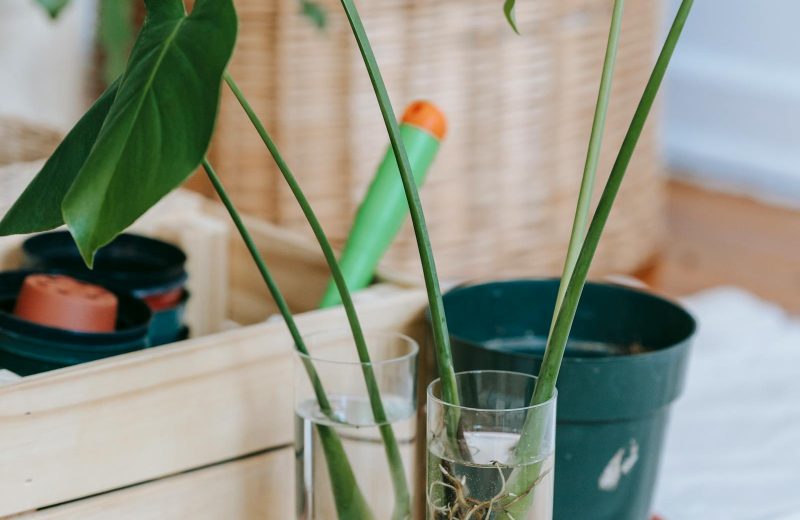
A garden, even a small one, connects children to water as a resource. Plants need water, water comes from somewhere, the rain barrel and the hose and the watering can all become parts of a system the child participates in.
Tracking the water bill
For older children, showing them the water bill and having them help calculate per-person usage, per-day usage, or year-over-year change makes the abstract concrete. Many children find the numbers genuinely interesting once they understand them.
The shower song
For younger kids, a “shower song,” one specific song played from a speaker during showers, gives them a time signal without it feeling like a rule. When the song ends, the shower ends.
What doesn’t work
A few approaches consistently backfire:
- Frequent corrections. “You left the water on” repeated daily produces resentment, not change.
- Moral framing. “You’re hurting the planet” produces guilt without producing behavior change in most kids.
- Comparison to peers. “Other families don’t waste water like this” rarely motivates.
- Bribery for conservation. Paying kids to save water makes conservation conditional on the payment.
- Visible monitoring. Tracking each child’s water use publicly creates competition or resistance.
The modeling factor
Above all, what kids learn is what they observe. The household where parents reliably turn off the tap while brushing produces kids who do the same. The household where parents leave the tap running while talking produces kids who develop similar habits.
This is the strongest signal. No amount of instruction overcomes contrary modeling. No amount of perfect modeling needs instruction. The behavior of the adults sets the household culture, and the kids absorb that culture.
The conservation-as-identity framing
The most durable framing for kids is identity: “We’re a family that pays attention to water” rather than “We have to save water.”
Identity statements stabilize over time. They become part of how the child sees themselves and their household. Years later, the adult who grew up in such a household maintains the practices without effort. They’re simply how things work.
Rule-based framings, by contrast, tend to break when the child leaves home. The teenager who was forced to take 5-minute showers takes 15-minute showers as soon as they can. The teenager who grew up in a household where short showers were just how showers worked tends to maintain the pattern.
The long view
The conservation habits you build with your kids today affect their behavior decades from now. The water-conscious 8-year-old who participates in installing a rain barrel becomes the water-conscious 35-year-old who installs water-efficient fixtures in their own home. The behavior compounds across generations.
For most parents, this is the deeper motivation. Not the immediate water savings (which are modest in childhood years), but the lifetime patterns being established. Kids who grow up with water awareness develop into adults who treat water as a resource worth attention.
The teaching that produces this isn’t direct. It’s the slow accumulation of participation, observation, and modeling across years. The lectures are mostly counterproductive. The household culture is what carries.
How childhood habits scale across a lifetime
Individual conservation actions look small in isolation. A 30 percent reduction in shower water. A new faucet aerator. A more efficient toilet. None of these individually transforms a household’s water bill. The cumulative effect across a childhood spent in that household, however, is substantial, both in resources saved and in how the child later relates to water as an adult.
A household that completes a basic set of conservation upgrades and habits typically uses 40 to 60 percent less water within a few years than it did before starting. Across a decade, the cumulative water savings reach hundreds of thousands of gallons. The cumulative dollar savings reach thousands of dollars. The cumulative carbon savings (from reduced hot-water heating) add another meaningful dimension, and the child watching all of this happen is quietly learning what “normal” water use looks like.
None of this requires heroic effort in any single moment. It requires consistent attention over time: the willingness to keep making small improvements when they present themselves, the discipline to maintain what’s been installed, the patience to let the savings compound. The household at year ten doesn’t look dramatically different from the household at year one, except that it’s quietly running on roughly half the water, and the kids who grew up in it now expect that same efficiency in their own homes.